The short version
Restumping, house raising, relevelling and underpinning are building work under section 5 of the Building Act 1975, which defines building work to include building, repairing, altering, underpinning, moving or pulling down a building, and excavating or filling that may affect the stability of a building. Building approval in Queensland comes from a licensed building certifier, not from a planning department. A full restump, any underpinning and any house raise is assessable building work that needs a building development permit. Replacing a few stumps may be accepted development that needs no permit, and the certifier decides which side of the line your job falls on.
Separately, the builder must hold a licence from the Queensland Building and Construction Commission for any building work over $3,300, the work is insured under the Queensland Home Warranty Scheme above the same figure, and the contract has to be in writing at a level set by the price. None of that is onerous for a home owner. All of it is worth knowing before the first quote arrives.
Who issues the approval in Toowoomba
A building certifier. In some Queensland councils that means only private certifiers; Toowoomba Regional Council still runs its own building certification team, Total Range Certification, alongside the private certifiers who work in the region. Council's certification phone is 4688 6828, the general line is 131 872, and a duty building certifier is available at the Toowoomba Service Centre on Tuesdays and Thursdays from 9 am to 4.30 pm for questions before you lodge. You can use council or a private certifier; the permit is the same either way.
Council's own advice on building or extending a house is to engage a licensed certifier before starting, and it lists the mandatory inspections as footings, slab, frame and final. For a restump the ones that matter are footings and final: the certifier or their inspector looks at the stump holes and footings before the stumps go in, and at the finished job before the approval is closed out. Council also says a geotechnical engineer may be needed to test the soil and design the footings, which on the black clay is not unusual. In practice the restumper arranges the certifier, the engineer if one is needed and the inspections, and the fees sit inside or beside the quote. Ask which.
When a permit is needed, and when it is not
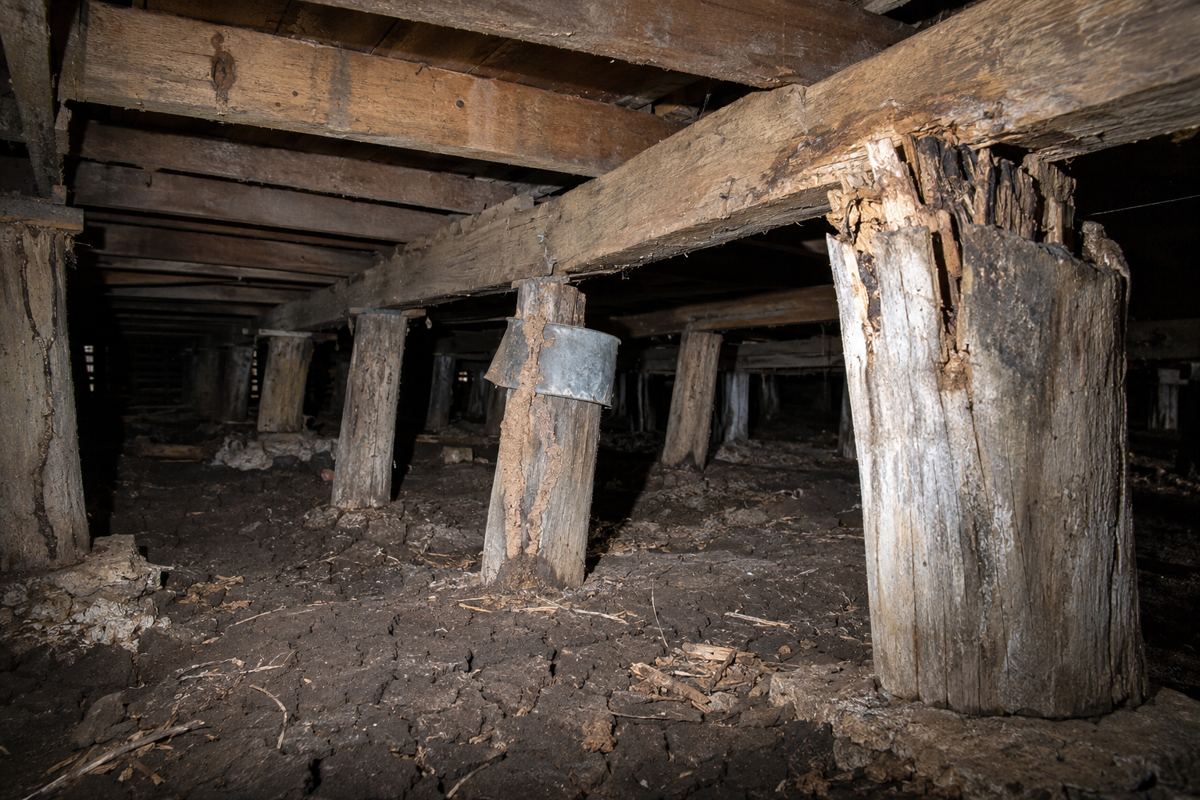
Council's where to start with building work page says most structural work needs building approval and names underpinning and moving a building as building work, with some minor work accepted development under Schedule 1 of the Building Regulation. The Schedule allows repairs that affect only a minor structural component, within a limit on the share of the structural components of the same type that are touched. Logan City Council's fact sheet on domestic building approval states it plainly for stumps: re-blocking or restumping of an existing building over 20 per cent of the building's structural components needs building approval, and raising the height of a dwelling needs approval. Moreton Bay and Fraser Coast councils publish similar sheets. This site has not verified the exact wording of the Schedule, and Toowoomba does not publish its own line for restumping, so the rule to work to is:
- Replacing a handful of stumps, well under a fifth of them, with no change to the height or the floor level: usually accepted development, no permit. The certifier confirms it. See partial restumping.
- A full or substantial restump: assessable building work, building development permit from a certifier.
- Any raise, however small: assessable, permit. Raising also brings in the planning scheme if the house is a heritage or character place or sits in a flood hazard area.
- Any underpinning: building work by definition under section 5, permit, and an engineer's design.
- Relevelling on existing sound stumps: often treated as a repair, but ask the certifier, because packing and re-fixing bearers across a whole house can be read as affecting the structural components.
Since 16 February 2026 council has also had Temporary Local Planning Instrument 01/2026 in force, a table of assessment for building works under the Toowoomba Regional Planning Scheme 2012. It changes how some building work is assessed against the planning scheme; it does not change the Building Act. If your job touches an overlay, the certifier and council's planning team will say what the TLPI means for it.
The QBCC licence
QBCC requires a licence to carry out, or to contract for, building work valued over $3,300 including labour, materials and GST. Almost every restump passes that. The licence has to be in a class that covers the work, and there is no class called restumping. For a house, which is a class 1 building, the class that covers it is Builder Low Rise or higher. QBCC's own Resilient Homes Fund contractor register lists the classes it accepts for home raising: Builder Low Rise, Builder Medium Rise, Builder Open, Building Restricted to Alterations and Additions, and Building Restricted to Building Removal. The Foundation work (piling and anchors) trade class covers underpinning and piling. The old repairs and maintenance class is capped at $10,000 and cannot alter a loadbearing member or add a column, floor, foundation or wall, so it does not cover restumping at all.
| Work | QBCC licence class that covers it |
|---|---|
| Full or partial restump of a house | Builder Low Rise or higher (Builder Medium Rise, Builder Open), or Building Restricted to Alterations and Additions |
| House raising | The classes on QBCC's Resilient Homes Fund register: Builder Low Rise, Builder Medium Rise, Builder Open, Alterations and Additions, Building Removal |
| Underpinning and piling | Foundation work (piling and anchors) trade class, or a builder class that covers it |
| Chemical termite management | A QBCC occupational licence, regardless of the value of the work |
| Repairs and maintenance class (historical) | Does not cover restumping: capped at $10,000 and cannot alter a loadbearing member or add a foundation |
Check the licence before you sign. The QBCC licensee register is searchable by name or licence number and shows the class and whether the licence is current. It takes two minutes and it is the single most useful check a home owner can make.
What an unlicensed job costs
Section 42 of the Queensland Building and Construction Commission Act 1991 makes unlicensed building work an offence with maximum penalties of 250, 300 or 350 penalty units depending on prior offences, or a year's imprisonment. The penalty unit is $172.70 from 1 July 2026, so those maximums are $43,175, $51,810 and $60,445. Section 42(3) is the part that matters to a home owner: an unlicensed person is not entitled to any payment for the work beyond the reasonable cost of materials and labour, with no profit. A cheap restump from someone without the licence is not a bargain the law will help them collect on, and it carries no home warranty cover for you.
Doing it yourself
QBCC's owner-builder rules let you do building work on your own property up to $11,000 without a permit. Above that you need an owner-builder permit, which means completing a course, one permit every six years, no home warranty cover for the work, a notice on the title for seven years, and disclosure to a buyer if you sell within six years. The permit is for you, not for an unlicensed friend; the work still has to be approved by a certifier where it is assessable. Few owners restump their own house, and the paperwork is one reason.
Home warranty insurance
The Queensland Home Warranty Scheme is statutory insurance run by QBCC and funded by premiums. It applies to residential building work over $3,300. The contractor collects the premium from you as part of the contract price and pays it to QBCC within 10 business days of signing the contract and before starting work. Structural defects are covered for 6 years 6 months from the contract date and non-structural defects for 6 months, and the standard maximum cover is $200,000. QBCC's guide to home warranty insurance explains what is and is not covered. What you need to do: ask for the QBCC insurance notice, which shows the premium has been paid, and keep it with the contract. It attaches to the house and passes to a buyer.
Contracts, deposits and cooling off
QBCC's contract levels set what the paperwork has to contain. Under $3,300 no written contract is required. From $3,301 to $19,999 the work needs a Level 1 contract: written, dated and signed by both parties before work starts, naming the parties, the work and the price. At $20,000 or more it is a Level 2 contract, which adds a start date, a fixed price or the method for working it out, the statutory warranties, and the Consumer Building Guide, which the builder gives you before you sign. Over $3,300 the contract comes with a cooling-off notice.
Deposits are capped: 20 per cent where the contract is $3,300 or less, 10 per cent on a Level 1 contract, 5 per cent on a Level 2 contract. Progress payments have to be proportionate to the work done. A restumper on a Level 2 job can ask for one twentieth of the price up front and no more, and the next payment comes when stumps are in the ground. Those were the rules in October 2026; QBCC's pages carry the current figures.
Council's other applications
Two more things can sit on a restump. If a new stump, a footing or a drain goes over or near a council sewer, water main or stormwater pipe, council's building over or near services application is needed first. And where the drainage work that goes with a restump connects to council stormwater, a plumbing and drainage application applies, with a soil classification report; council fast-tracks some plumbing applications in 2 business days and takes up to 10 on others. Council's fees for its own certification and these applications are set each financial year in its fees and charges register. This site has not verified the amounts; ask council for the current fee.
What this page cannot do
It cannot tell you whether your job needs a building development permit. The line between accepted development and assessable building work depends on how many stumps are touched, whether the height changes and what the certifier makes of the Schedule, and this site has not verified the Schedule's exact wording. It cannot tell you what the certifier, the engineer or council will charge. It cannot check a licence for you; the QBCC register does that. And it is not legal advice on a contract: the Level 1 and Level 2 rules, the deposit caps and the cooling-off period are summarised here as they stood in October 2026, and QBCC's pages carry the current versions. Ask a certifier, ring council on 131 872, or ask QBCC.
Check the current rules before you rely on this
This page describes how restumping, house raising and underpinning are approved, licensed, insured and contracted in Toowoomba. It describes the rules in general terms as they stood in October 2026. Standards, forms, thresholds and fines change.
The authoritative sources are Building Act 1975 (Queensland), Toowoomba Regional Council, building certifiers, Logan City Council fact sheet, building approval requirements for domestic work, QBCC, when you need a licence, Queensland Building and Construction Commission Act 1991, section 42 and QBCC, domestic building contract levels. Where anything here differs from those sources, they are right and we are not.
We are not building certifiers, engineers, planners or lawyers. For what applies to your house, ask a licensed building certifier or ring Toowoomba Regional Council on 131 872.
Accurate at the time of writing, October 2026. Always check the source before relying on it.